
Cameron Parish Criminal Case Files
A criminal court record in Cameron Parish is the case file kept for a prosecution in the 38th Judicial District Court. The research record identifies the 38th JDC as the one-parish trial court with original jurisdiction over criminal matters in Cameron Parish. Once a prosecution opens, the file may include the bill of information or indictment, arraignment minutes, motions, plea entries, trial settings, court orders, disposition, sentencing, probation terms, fines, costs, and post-conviction or expungement filings. The Cameron Parish Clerk of Court is the practical local custodian for criminal case records, certified copies, criminal certificates, and criminal dispositions.
The court case file should not be read as the same thing as a sheriff booking entry. The sheriff feed can show a current custody charge, bail amount, and arresting agency, but the court record shows what was filed and how the charge moved through the judge, Clerk, and prosecution process. A closer explanation of booking charges and prosecutor-filed charges is available in the Cameron Parish arrest records and court charges material, while full civil, probate, family, and traffic file channels are handled through broader court-record access.
The Louisiana criminal and law-enforcement records statute supplies the access backdrop for criminal files and related law-enforcement records.
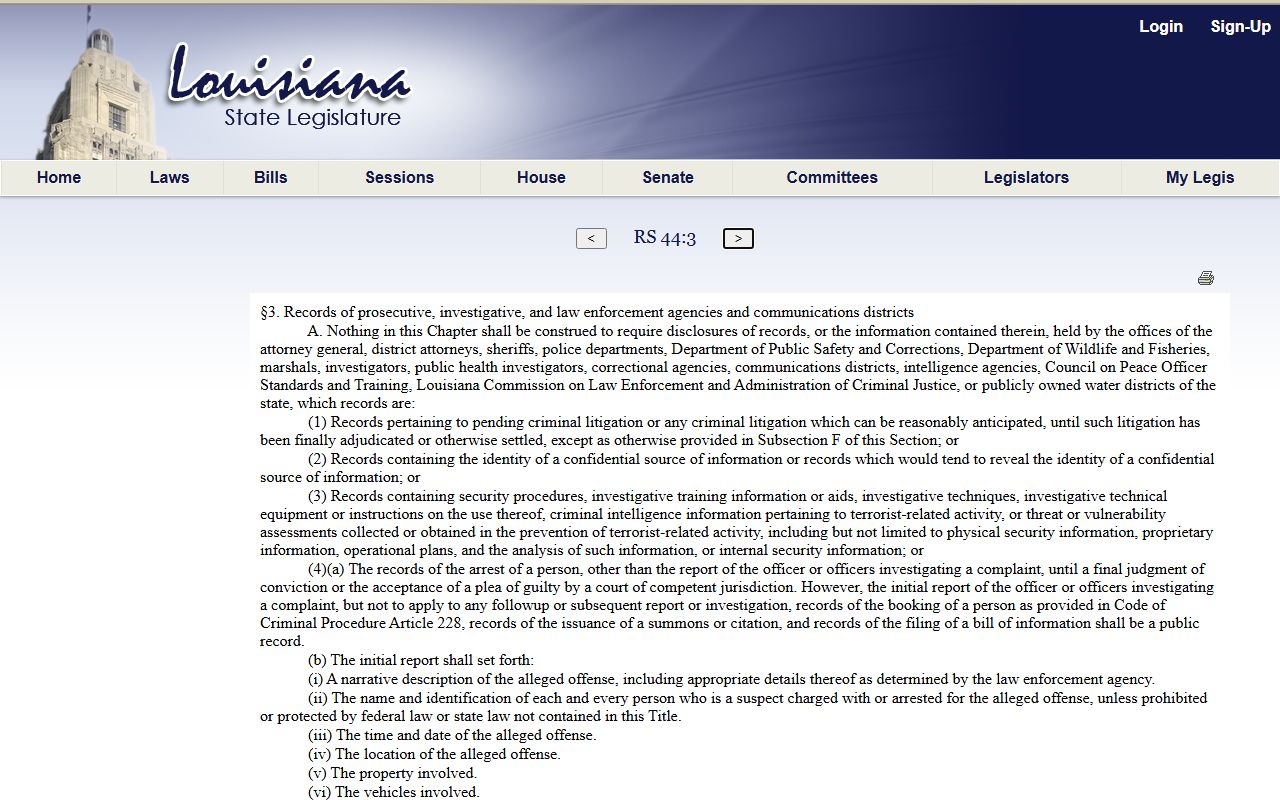
That source matters because criminal court records can be public while investigative material, juvenile information, and protected identifiers remain restricted.
Search Cameron Parish Criminal Records
No single county-branded public search box was located for Cameron Parish criminal court records. The working search path is a channel map. Start with the Cameron Parish Clerk of Court for local case files, certified copies, criminal certificates, and criminal dispositions. For remote access, use the statewide LCRAA portal or the Clerk-linked ClerkConnect channel where available. Louisiana law requires public electronic access through LCRAA to certain criminal minute entries or summaries for eligible criminal cases filed on or after January 1, 2020, but traffic is excluded and full document images are not guaranteed.
- Identify the defendant name, case number if known, filing date range, and whether the request is for a certificate, disposition, or full case copy.
- Check statewide remote access through LCRAA, recognizing that a login or registration may be required.
- Contact the Cameron Parish Clerk of Court when the remote tools do not show the needed criminal case record or when certified copies are required.
- Use the 38th JDC office for scheduling, Zoom, or docket-setting questions rather than copy requests.
- Use sheriff custody and jail feeds only for current inmate, booking, bond, or warrant clues, not final court outcomes.
The Louisiana DPS&C Cameron Parish contact page is a useful source for jail, sheriff, district attorney, and Clerk contact context around criminal records.
Those justice contacts help separate Clerk case-record requests from jail custody questions and prosecution office questions.
Cameron Parish Criminal Case Flow
A Cameron Parish criminal court record changes as the case moves. At the start, the file may show a charging document and an arraignment entry. Later entries can show defense motions, continuances, trial settings, pleas, orders, sentencing, and post-judgment filings. Minute entries are important because they summarize what happened in court even when the full pleading image is not available online. The record can also show that a charge was dismissed, amended, reduced, or resolved by plea.
Case flow: Charges Filed › Arraignment › Pretrial and Motions › Plea or Trial › Disposition › Sentencing
| Stage | What the Criminal Record Shows |
|---|---|
| Charges Filed | Bill of information, indictment, or other filing that starts the court charge record. |
| Arraignment | Minute entry showing the defendant's formal response to the charge. |
| Pretrial and Motions | Requests, rulings, continuances, notices, and hearing settings before trial or plea. |
| Plea or Trial | Guilty plea, not guilty plea, trial result, or other resolution step. |
| Disposition and Sentencing | Final result, sentence, probation, fine, cost, restitution, or other court-ordered term. |
The District 38 public-defense source also gives context for appointed defense in Cameron Parish criminal cases.
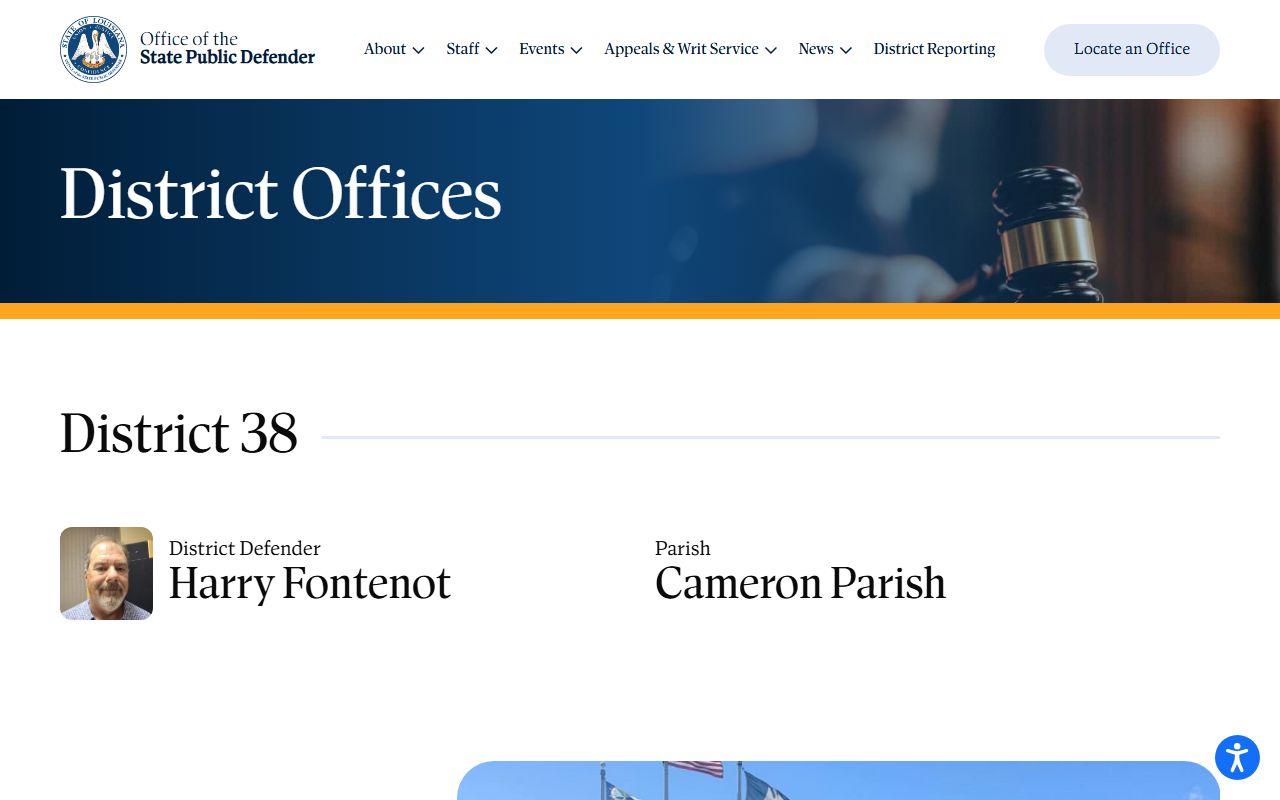
Public defender details belong with the criminal court ecosystem because counsel and appointed-defense status can affect scheduling and case progress.
What Cameron Parish Criminal Records Show
The research file did not locate a public Cameron Parish sample case image without portal access, so the field inventory is drawn from official Clerk services, LCRAA requirements, and Louisiana court-record practice. A full criminal court file can contain more than a name and charge. It may show case identifiers, court and judge, pleadings, hearing events, minute entries, charge fields, financial fields, and final case status. Some fields are public, while private identifiers and sealed material can be redacted or withheld.
| Field | What It Shows |
|---|---|
| Case number | The official number assigned by the Clerk or court, used for copy and disposition requests. |
| Defendant and state | The accused person and the prosecuting party in a criminal matter. |
| Charge fields | Statute or code number, description, level, bail, plea, disposition, or sentence where available. |
| Minute entries | Summaries of arraignment, hearings, continuances, rulings, pleas, disposition, and sentencing. |
| Pleadings and orders | Motions, rules, court orders, judgments, and other filed documents. |
| Financial entries | Fines, costs, restitution, bond references, copy fees, or certificate outputs. |
| Restriction notes | Sealed, expunged, juvenile, or redacted items when public access is limited. |
Note: If the official online record is only a minute summary, ask the Clerk what copy type is needed for certified legal use.
Cameron Parish Charges vs Convictions
A charge is an accusation or filed count. A conviction is a guilty finding or accepted guilty plea. Cameron Parish criminal court records can show both, but they must be read in order. A single arrest can produce several booking charges, and the district attorney may later accept, amend, reduce, or dismiss charges after screening. A case file can also show charges that ended in dismissal, acquittal, or no conviction. Do not treat a filed charge as proof of guilt without checking the disposition and sentence fields.
| Point | Charge | Conviction |
|---|---|---|
| Meaning | An alleged offense filed or listed in the case. | A guilty result by plea or verdict. |
| Timing | Appears near the start and may change. | Appears after plea, trial, or final ruling. |
| Record use | Needs status and disposition review. | Needs sentence and completion review. |
| Common pitfall | May be amended, reduced, refused, or dismissed. | May later be affected by expungement limits. |
Reading Dispositions and Sentences
The disposition is the result of a charge or case. A disposition can show guilty, not guilty, dismissed, nolle prosequi, reduced, amended, or another court outcome. The sentence is different. It is the punishment or term imposed after a conviction, such as jail, prison, probation, fine, cost, restitution, or other conditions. A Cameron Parish criminal court record may show the disposition at one point in the docket and sentencing details in a later minute entry or judgment.
Failure-to-appear events can also change the record. The warrant research found that sheriff inmate data often shows bench warrant and failure-to-appear entries, which can stem from missed court rather than a new arrest investigation. For active warrant status, use official sheriff and court channels and do not rely only on the criminal case docket.
Cameron Parish Sealed and Expunged Records
Sealed and expunged criminal records require careful wording in Louisiana. The research states that Louisiana expungement generally limits public access rather than physically destroying every underlying agency record. A person seeking to restrict a Cameron Parish criminal record should identify the arresting agency, court case, charge, disposition, sentence, and completion status. Filing is made in the court with jurisdiction, and agencies may need notice. Eligibility depends on the specific outcome, so the Clerk, court, or counsel should be used for current case-specific requirements.
| Point | Sealed | Expunged |
|---|---|---|
| Public visibility | Removed from ordinary public view by court rule or order. | Public access is limited under Louisiana criminal procedure. |
| Underlying record | Usually still exists for authorized purposes. | Not treated as physical destruction of every agency record. |
| Common records affected | Juvenile, sensitive, or court-restricted filings. | Eligible arrests, dismissals, acquittals, or eligible conviction outcomes. |
| Where to start | Clerk or court handling the sealed case. | Clerk or court with jurisdiction over the criminal matter. |
The Louisiana expungement effect statute explains why expungement is an access limit rather than a simple deletion claim.
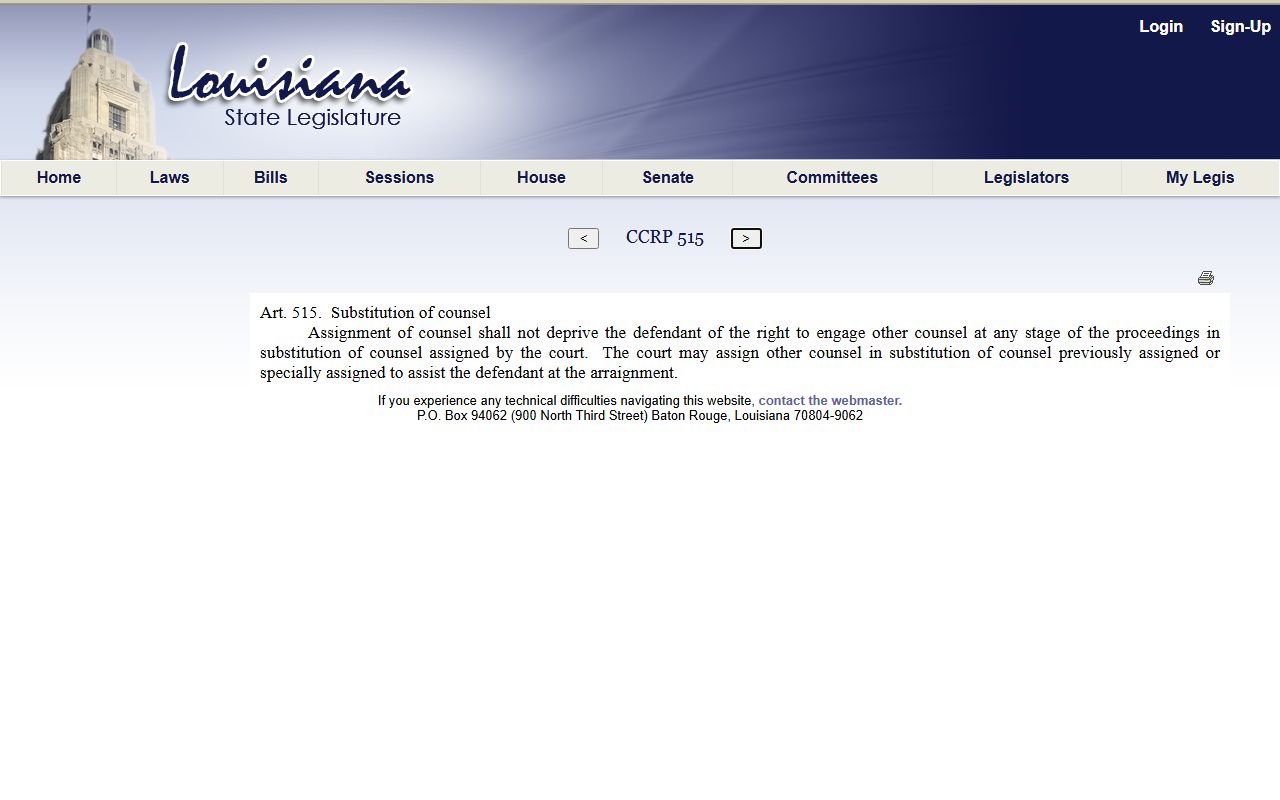
That distinction keeps Cameron Parish criminal record copy requests accurate when a case has later expungement activity.
Public Access to Cameron Parish Criminal Records
Louisiana public-records law gives adults a broad right to inspect, copy, or reproduce public records unless another law restricts access. For criminal court records, that broad rule works with criminal investigative limits and LCRAA's criminal minute-entry framework. The Clerk remains the office to ask for court case files, certified copies, criminal dispositions, and criminal certificates. The sheriff remains the office for booking, jail, Most Wanted, warrant tip, and law-enforcement records, including records requests not exposed in public feeds.
Key access rules: La. R.S. 44:31 gives the general right of access, La. R.S. 44:32 sets custodian response duties, and La. R.S. 13:5992 addresses public electronic criminal minute-entry summaries.
The sheriff-linked Louisiana State Police sex offender registry information is related to criminal public-safety records, but it is not a substitute for the district-court case file.
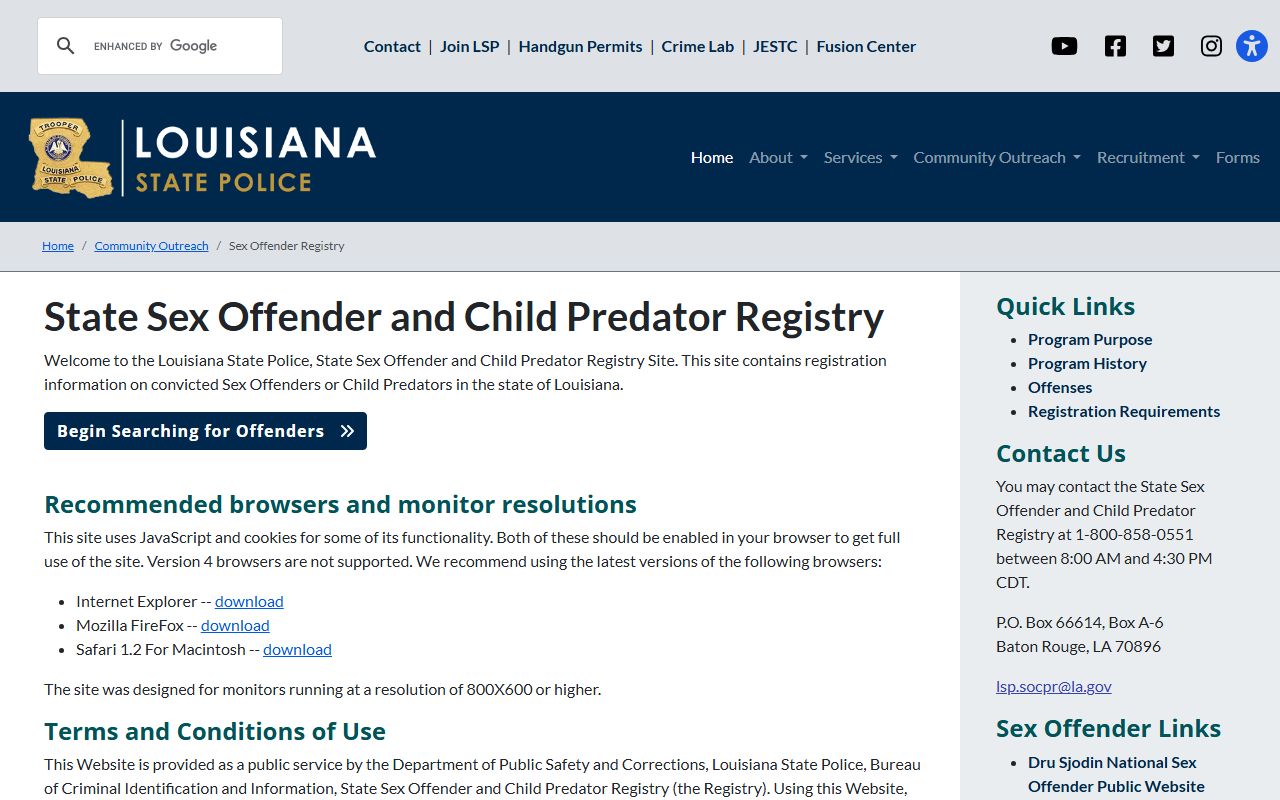
Registry research should be kept separate from court disposition research because each system answers a different public-record question.
Restricted Cameron Parish Criminal Records
Not every criminal or law-enforcement record is public. Juvenile records are not treated like adult criminal files. Sealed and expunged records can be blocked from ordinary public access. Ongoing investigative files can be restricted under criminal-record access rules. Personal identifiers, financial account numbers, minor names, and confidential materials may be redacted. Adoption, mental-health, interdiction, and protected family-court material can also be restricted when those issues intersect with court files.
For a record not visible online, ask the proper custodian for the record by name, case number, date range, and document type. The Clerk is the court-file channel. The Sheriff's Office custodian is the channel for sheriff records not exposed in public feeds. Use the District Attorney for prosecution context and the Public Defender for appointed-defense contact, but neither office was documented as a public case-search portal.